
It should be surprising that in 2023 women and femmes are still faced with medical discrimination, but it is the sad reality for hundreds of women around the world.
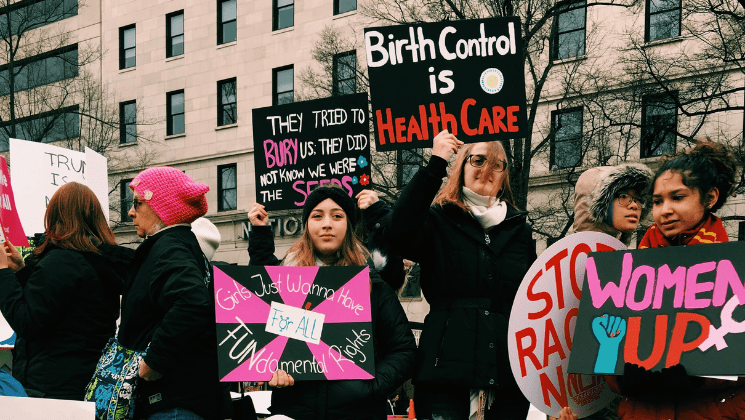

We’ve all heard of the gender pay gap, but the gender PAIN gap might be a new one to you.
The gender pain gap is a form of discrimination caused by an unconscious medical bias which typically cause doctors to not take women’s pain and health issues as seriously as males. A recent study confirmed that ‘perceivers underestimated female patients’ pain compared with males’ pain.’
It should be surprising that in 2021 women are faced with yet another discrimination, this time concerning their health and wellbeing, but it is the sad reality for hundreds of women around the world. The stereotype that women are more sensitive to pain or more likely to act hysterically when it comes to their health is still having detrimental and damaging impacts on our lives and it needs to change.
As a 20-year-old woman, I’ve been ignored by doctors more times than I can count. When my periods were exceptionally painful and I experienced symptoms I knew were not normal, I was told “It’s normal, don’t worry about it.” After a year of complaining and insisting that someone listened, I was placed on the pill. When I broke my leg aged 9 and screamed in agony I was told to “calm down, it’s not that bad” – spoiler alert: it was that bad and an exceptionally rare injury. After suffering years of joint and muscle pain alongside other symptoms which made day to day life very difficult, a doctor finally listened and I was diagnosed with fibromyalgia at the age of 20 (at least 5 years since I initially went to the doctor with these symptoms).
That’s a whistle stop tour of my experience, and unfortunately it is not an isolated one.A UK study found that female pain is often misinterpreted as anxiety or similar, leading to 50% of women being misdiagnosed after a heart attack. Similarly, a 2020 study of people with endometriosis found that those reporting of gynaecological pain alongside any mental ill-health contributed to missed or delayed diagnoses in over 50% of cases. Another spoiler alert – this physical health condition can often cause and, or, lead to mental health issues.
Georgia, 20, reported developing ‘tremendous amounts of pain’ and suspecting the condition at the age of 15. Speaking about her first doctor’s appointment with us, she said; ‘He conducted a minute-long physical exam which made me feel a little uncomfortable, then told me I didn’t have the condition”, which she had previously researched alongside her own symptoms. “Subsequently, [he] fobbed me off with a regular antibiotic to clear an infection (that he didn’t find).”
Following the appointment, Georgia “tried several risky at-home measures to try and reduce the pain and stop what was happening. I wouldn’t go to a GP for the next five years after the experience with this doctor, as I felt it wasn’t worth the embarrassment and pain of a physical exam to be told there was nothing wrong with me.”
Georgia received a diagnosis five years later after an emergency appointment where a nurse “very respectfully and gently conducted a physical exam led by consent, something this male doctor had failed to do when I was 5 years younger and much more scared, and when I left that room 15 minutes later, I had been prescribed immediate pain relief for the symptom I was experiencing, tools to manage it in the future and importantly, a diagnosis.”
Georgia’s experience is one that is not rare. When I asked Georgia what changes she wanted to see for future women she said “I would like patient notes to be more thorough, by mandate. If a patient speaks to a doctor about symptoms, I would like them noted down without them being verbally dismissed in order for accountability. Should a patient request a test, I would like this request to need to be documented in the event the doctor decides it’s not worth the referral. Because people know their own bodies. I knew my body, and I knew my pain was something much worse than an antibiotic could cure.”
The statistics don’t get any better when it comes to looking at the experiences of women from Black, Asian or other ethnic minority backgrounds. Research shows that these women are 34% less likely to receive the standard treatment of care and twice as likely to be misdiagnosed. This has led to many unnecessary deaths related to heart issues. The same report states: ‘Amplifying the gender disparity further for Black, Asian, and minority ethnic women is the fact that they are less likely to be included in medical research compared to white people. Lack of understanding and preconceptions about the incidence, prevalence and presentation of common conditions within certain ethnic groups amongst healthcare professionals leads to delays in diagnosis, resulting in a higher risk of morbidity and mortality.’
Much more needs to be done to reduce gaps in data and remove implicit biases from healthcare treatment – nothing should be presumed about a patient simply because of their gender or ethnicity. Healthcare professionals need to be held accountable, medical students need more training on the removal of these biases and government action and research is needed to help track these improvements.
When it comes to health, nothing should be taken for granted.
 Disgraceful Magazine